Australians will likely vote in autumn 2023 on whether to enshrine a “Voice to Parliament” in the constitution. This would give Aboriginal and Torres Strait Islander peoples more say and influence over political decisions. Sounds reasonable - but why are Australians struggling with it so much? A personal take.
We have the chance to turn the pages overWe can write what we want to writeWe gotta make ends meet, before we get much older
We’re all someone’s daughterWe’re all someone’s sonHow long can we look at each otherDown the barrel of a gun?
You’re the voice, try and understand itMake a noise and make it clearOh-wo-wo-wo, we’re not gonna sit in silenceWe’re not gonna live with fear
This time, we know we all can stand togetherWith the power to be powerfulBelieving, we can make it better…
When I was 15, John Farnham’s song played on constant rotation on German radio. I’m not sure if I knew then that Farnham was Australian, but I might have. Mid-80s saw several Australian acts washing up on German shores - INXS (my favourite back then, naturally when nobody knew them), Midnight Oil, Men at Work. AC/DC occupies special territory.
Why drag out this old stuff? What does John Farnham have to do with Australia’s current political powder keg? Well, I’m hearing “The Voice” again. Constantly. My car radio runs either Triple J when I’m feeling young and hip, or Triple M Newcastle for local news. I love the daily morning show “Tanja and Steve”, which amusingly spreads the entire panorama of Australian culture.
When Tanja and Steve finish, “The Voice” plays. Feels like eight times an hour. That might be too much. Three times minimum. Then all day long. The song has that typical synth boom-ba-da-boom, still comes across quite powerfully. The lyrics aren’t particularly complex - about sticking together, wanting to participate, to speak up, a voice of the people.
The referendum requires only YES or NO - that’s what makes it so difficult
I don’t know if “The Voice” went through the roof in Australia back then like it did in Germany. But now it’s topical again, because a decisive referendum for “The Voice to Parliament” is scheduled for autumn - a vote whose short question allows only a one-word answer. Should be simple, right?
The question is:
“Do you support an alteration to the constitution that establishes an Aboriginal and Torres Strait Islander voice?” (YES/NO)
Simple question, but hard for Australians to answer. Because the question contains incredible explosive potential - either it detonates with a massive bang and throws Australia into great turmoil, or it doesn’t ignite and brings just as much havoc. “The Voice” is a real can of worms, a Pandora’s box.
Surface resistance points to deep, unhealed wounds - starting with Captain Cook
What’s hitting resistance here? Is it the constitutional change that sets off alarm bells for some Australians? Or is it generally about Aboriginal and Torres Strait Islander rights to participate in decisions? Let’s resist the first superficial explanation reflex. The problem runs deeper. Much deeper (even deeper).
When I say “deep”, I also mean “old”. It’s a very old problem that lies extraordinarily deep because it was buried from the beginning and had more rubble piled on top over centuries. I’m talking about Australia’s inglorious history, which variously begins with James Cook in 1770 or the founding of the British colony in 1788, or has been conveyed by Indigenous peoples for 60,000 years through songlines and other rituals. The whole thing rests on the false and tragic assumption that Indigenous people only lived on beaches and therefore there were few of them.
When Indigenous people initially joyfully greeted the strangely dressed people from the big ships (Cook and his colleagues claimed this, though we now know it wasn’t so), they didn’t yet know they’d shortly be slaughtered, captured, discriminated against, robbed of their land and later even robbed of their children. In short: not much to be proud of.
Matter of interpretation: “Australia Day” or “Invasion Day”?
This is why Australia Day celebrations on 26 January, marking Captain Cook’s arrival, are met with counter-festivities of “Invasion Day”. We could dig much deeper here, but I think it’s clear the colonists weren’t particularly nice to Aboriginal people and there’s enormous guilt, a massive shadow, pitch-black storm clouds hanging over Australia’s history.
Throughout Australian history there have been events where heavy downpours from these black guilt clouds lashed down on Australians. That’s beyond scope here. Anyone wanting to know more can book a video conference with my eleven-year-old son, who’s a recognised expert on Australian history. Must be the age. When I was 11, I memorised the Moscow Olympics yearbook. Back then Nadia Comaneci won gold twice, one on bars. Useless knowledge, really.
Centuries of cultivated prejudices don’t simply dissolve
Let’s assume: relations between Aboriginal people and “white” Australians were always difficult and tense. One side thought Indigenous people were uncivilised, violent, lazy, unreliable and lacked the gene for processing alcohol - basically different; and Aboriginal people felt robbed of their freedom, land and history, generally not taken seriously, oppressed and severely decimated. It was always thus, and I fear it still is.
I only need to talk to my neighbour, who throws around these stereotypes freely. Naturally, on his campervan travels he’s met many Aboriginal people, but his experiences only validate his prejudices: Stay away from Aboriginal people, or they’ll immediately stick a knife in your car tyres and then you’ll have it at your throat…
A cultivated culture of polite silence
Friendly and open as Australians are, they can also be closed off. Some English ancestry shows through there. Those who avoid difficult topics often behave politely and evasively to sidestep or avoid them. A vainly nailed pudding on the wall. So Australians stayed silent for roughly 200 years. Until John Farnham conquered the radios.
That’s nonsense, of course, but those listening carefully in the late 80s, to “Beds are Burning” by Midnight Oil for instance, could have heard it was about giving land back to Aboriginal people. I always thought the song was about climate change.
Paul Keating stops staying silent
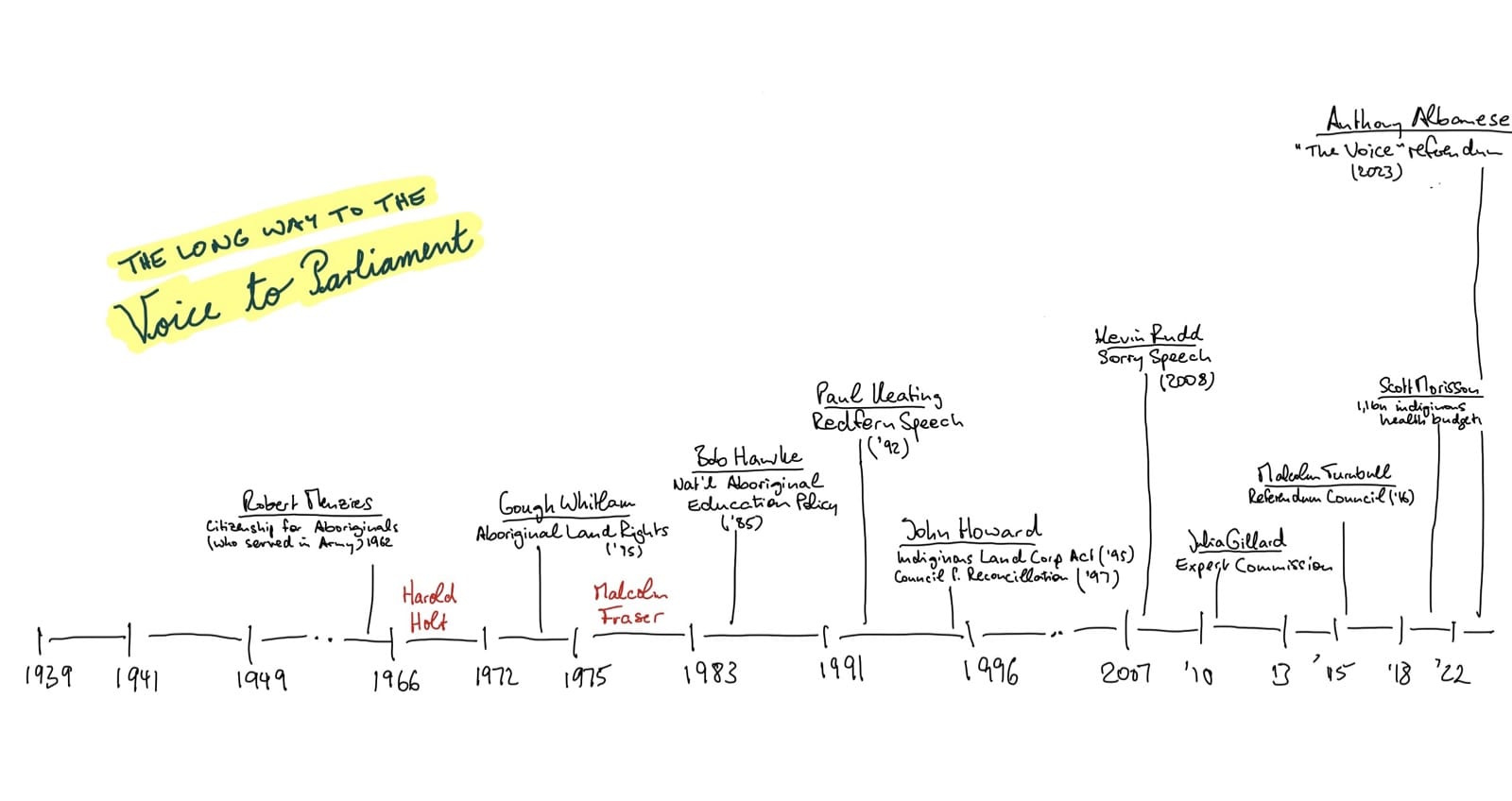
I was a bit too young then, but apparently it was a highly political time. Between Band Aid and the fall of the Berlin Wall, political elastic was being stretched everywhere. So in 1992, then-Prime Minister Paul Keating stood in Redfern Park in Sydney to address colonisation and its consequences for Indigenous people. The rhetorically polished Keating with sharp tongue and biting humour is still considered one of Australia’s best political speakers.
In the speech, Keating, the “Placido Domingo of Australian politics”, spoke about the necessity for all Australians to acknowledge wrongs against Indigenous peoples and work toward a more just and reconciled society. Famous quote: “We cannot go forward until we acknowledge the past and give meaning to our nation by embedding it in Aboriginal historical contexts.”
Keating deliberately held the speech in Redfern. It was a suburb where mainly Aboriginal people lived. Even 20 years ago, older Australians (like my grandmother-in-law) advised giving Redfern a wide berth. Since Redfern sits centrally in the city between Central Station and the university, it’s also undergoing cultural change called “gentrification”. So: hipsters in, and the “Abbos” - as Aboriginal people are disrespectfully called - now quickly out.
Australia heals faster when Labor Party prime ministers are in power
Fun fact: The current prime minister wanting to drum up votes for the referendum is Anthony Albanese, whose nickname since university has been “Albo”. Watch your pronunciation. Like Albanese, Paul Keating was from Labor, unusually spelled without the “u” for Australia. I highlight this because apparently there are only forward steps on the “Aboriginal” issue when Labor PMs are in power. My impression is that these PMs then predictably choke on it.
When I ask friends about Paul Keating, I often hear he was a good man who improved the social system, strengthened relations with China and looked after Aboriginal rights. My neighbour surely has a different opinion. He supports the Nationals, quite strong in New South Wales. They sit in the CSU drawer politically (though at least the CSU doesn’t deny climate change - the Nationals still struggle with that) and usually govern with their larger partner, the Liberals (the CDU).
“Stolen Generation”: Bring them back
In 1996, Paul Keating was replaced by John Howard, who lasted unusually long by Australian standards. During his long tenure, Howard collected various nicknames. His supporters called him “Honest John” and political opponents “Little Johnny”. Eventually both sides could agree on “The Man of Steel”.
I don’t know, but the 1997 Bringing them Home Report was possibly commissioned by Paul Keating. In our imaginary string of pearls toward the “The Voice” referendum, we must definitely include this report. The facts uncovered hopefully shocked even my neighbour, because the authors reported what nobody really talked about before, what few wanted to know: the “Stolen Generation”.
According to the report, until the 1970s at least 100,000 Aboriginal children aged 0 to 11 were taken away (“stolen”) and given to “white” Australians for “re-education”. The Bringing Home Report was a wake-up call for many Australians. For the first time, there was no pudding, but hard facts.
Steps toward reconciliation
The Bringing Home Report clearly outlined what the next steps toward reconciliation could be:
- An official apology from the Australian government for harm caused by previous policies and practices.
- Improved support for Indigenous communities and families.
- Establishment of a national compensation system for the stolen generations.
- Development of national guidelines to protect Indigenous children.
What’s happened so far:
[x] An official apology from the Australian government for harm caused by previous policies and practices (please keep reading).
[x] Improved support for Indigenous communities and families (could still be better).
[ ] Establishment of a national compensation system for the stolen generations.
[ ] Development of national guidelines to protect Indigenous children.
Kevin Rudd’s “Sorry Speech”
Sometimes it’s astonishing how clueless one wanders through the world. When I moved to Canberra with my family in 2007, I was heavily occupied with my eighteen-month-old daughter. In our old blue Subaru Forester we were constantly on the move: playgroups, the highly recommended botanical gardens, many fully air-conditioned shopping centres. I’d only marginally engaged with the political situation. Yet we lived in Australia’s capital.
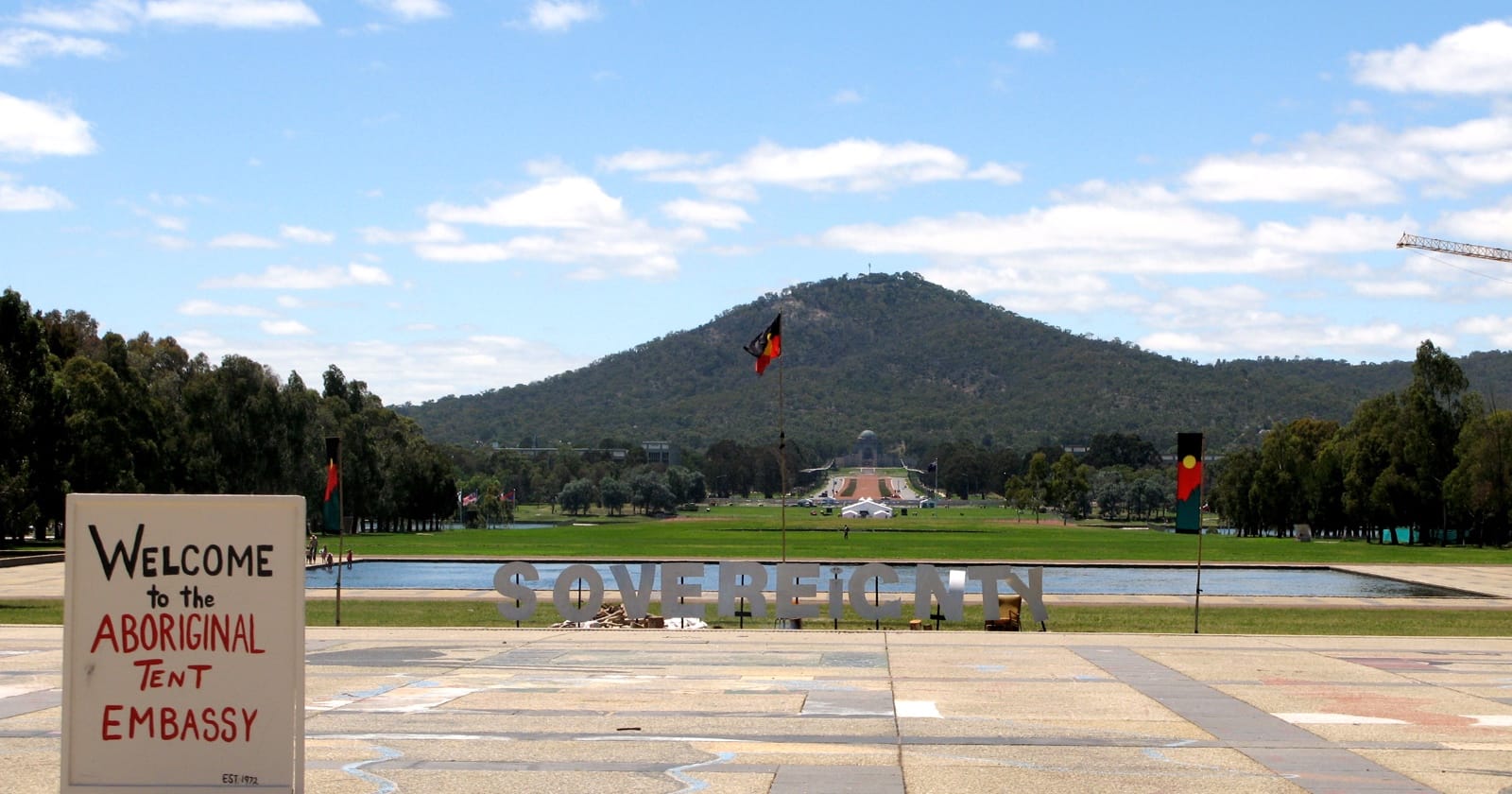
Naturally we constantly drove past Parliament House, saw the provisional Aboriginal Tent Embassy erected opposite Parliament House in 1972. Actually, our timing was quite exciting, because Kevin Rudd from Labor was the fresh-faced 26th prime minister.
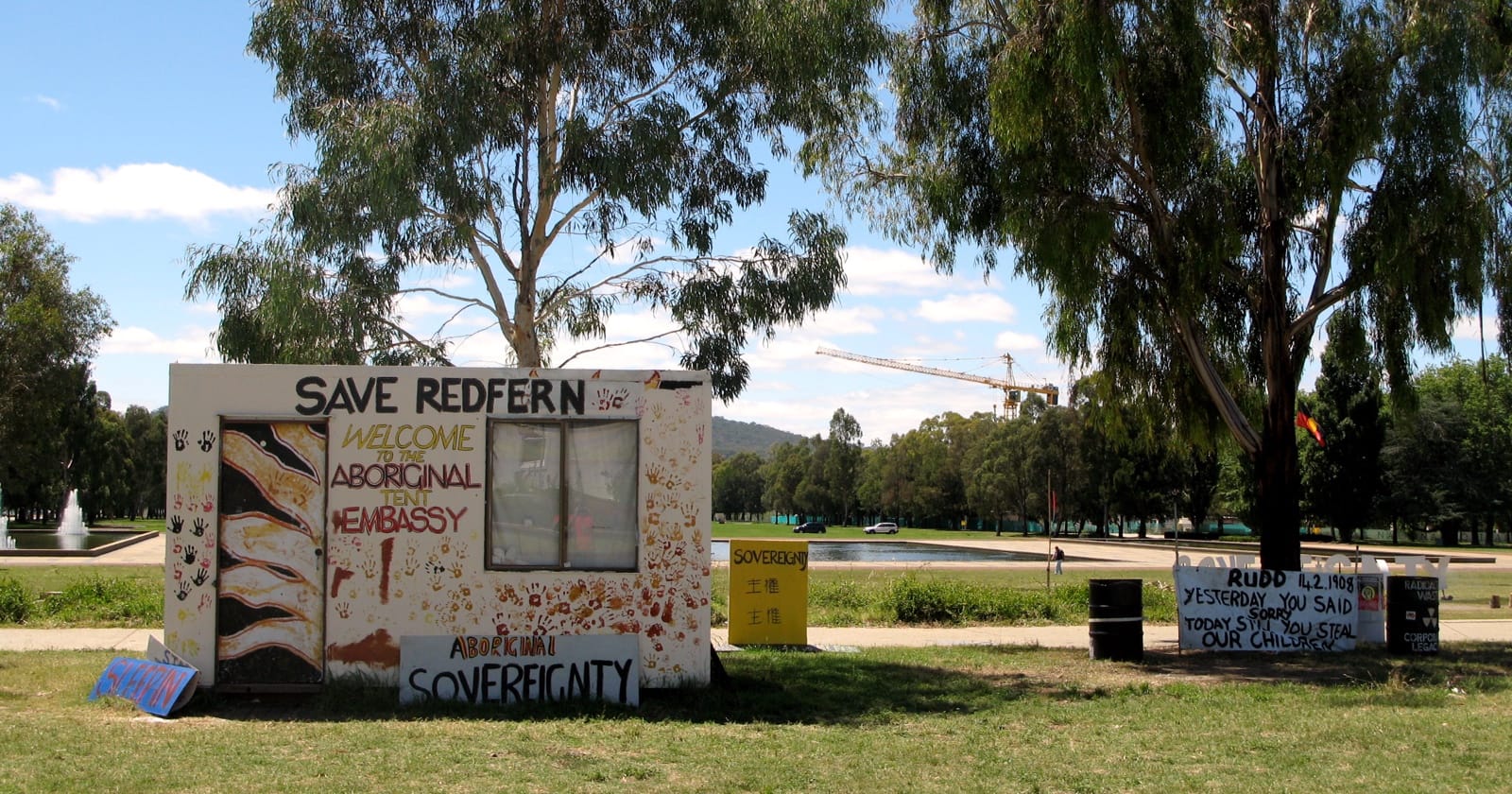
And Rudd from Labor was stringing another pearl: Initially I hadn’t realised an important address was coming. Suddenly Kevin Rudd stood bolt upright at his lectern in Parliament House delivering the famous Sorry Speech. I didn’t understand what he meant or why it was so important. Sorry - so what? It took a while to understand this wasn’t just about collective guilt admission, but something coming from a senior politician’s lips for the very first time. Rudd fulfilled the first part of the Bringing Home Report’s action catalogue. Probably the discussions leading to the Sorry Speech were as heated as now. I can’t judge - I wasn’t there.
After the brief sorry, a long processing
After this historic address, much moved: The Australian government invested in programs for Indigenous health, education and housing. The “Stolen Generation” issue now moved closer to the centre of discussions.
For Kevin Rudd, the Sorry Speech was his career’s most important moment, because afterward Rudd couldn’t ignite. He was quickly replaced by Julia Gillard. Rudd managed a brief comeback, equally unsuccessful. He had good ideas, wanted to transform Australia, but ran into too many walls. I found him likeable, but keep reading stories that “K-Rudd” wasn’t necessarily the best team player - “choleric boss” internally, “attentive son-in-law” externally. Apparently he’s licked his wounds and keeps inserting himself into Australian politics as an “elder statesman”.
Team Australia Captain Abbott hits the brakes
When we returned to Germany in late 2008, my interest in Australia also faded. We’d decided to return to Europe and stay there. I quickly lost track and interest in Australian domestic politics, everything seemed too far away and we returned to Germany during the financial crisis. In short: I had other concerns.
So we lived our lives in Germany and Australians lived theirs. Politically, after a brief and more or less incomplete Labor episode (Rudd/Gillard/Rudd), it was back to the Liberals in 2013 - with a hard course change in the person of “Team Australia Captain” Tony Abbott. Though he founded the “[Prime Minister’s Indigenous Advisory Council](https://en.wikipedia.org/wiki/Indigenous_Advisory_Council#:~:text=The%20Indigenous%20Advisory%20Council%20(IAC,was%20on%205%20December%202013.)", his harsh budget cuts for “Indigenous Legal Services” and undiplomatic remarks about the importance of Western culture in Australian history stuck in memory - like on Australia Day 2014: “We are a free people with a proud history and a strong culture, and nowhere in the world is our culture and our history celebrated more than on Australia Day.”
PM Malcolm Turnbull accelerates reconciliation
Abbott was succeeded in 2015 by the extremely ambitious but increasingly constrained Malcolm Turnbull (recommended reading: “The Curious Story of Malcolm Turnbull, the Incredible Shrinking Man in the Top Hat”).
For a Liberal, Turnbull was almost too “soft”: He advocated for marriage equality, didn’t deny climate change and pushed innovation. And helped establish a Referendum Council in 2015, where Indigenous community members would find a solution to enshrine their interests in the constitution. This group brought together various tribal leaders to find common language.
Uluru Statement from the Heart: Basis for “The Voice to Parliament”
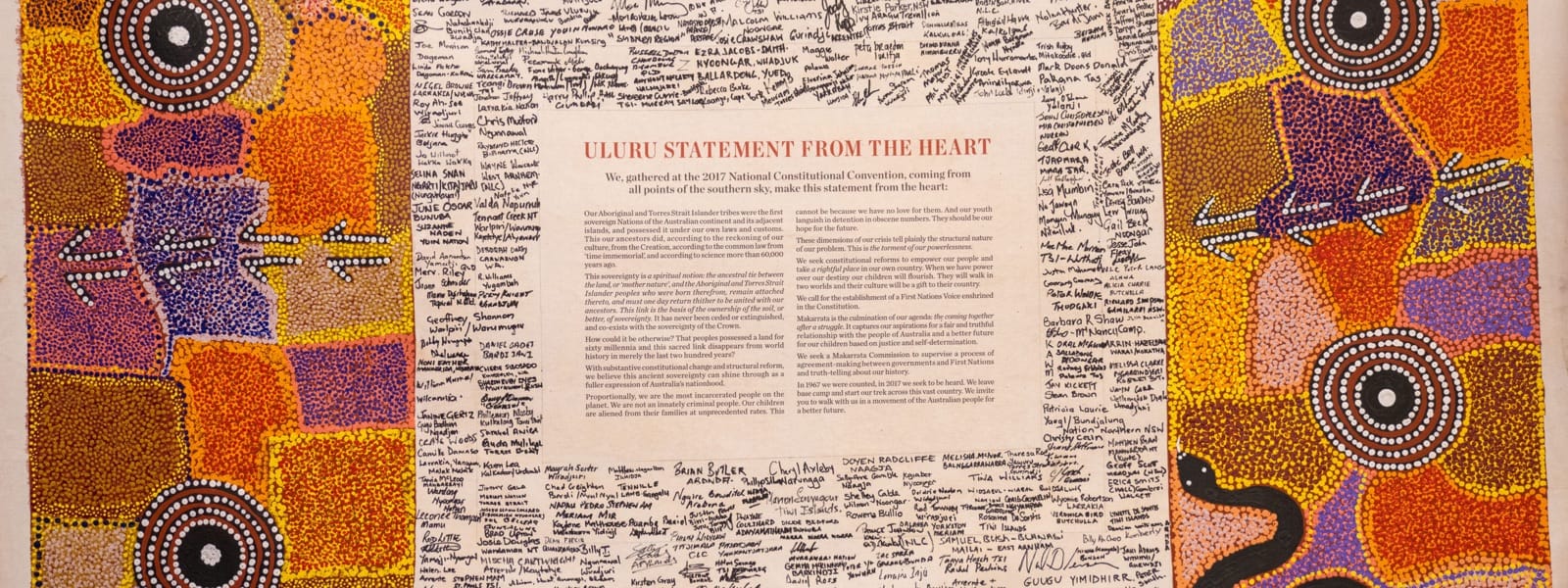
The Referendum Council’s voting and discussion results flowed into the “Uluru Statement from the Heart” manifesto. This manifesto was presented to the Australian government and public in May 2017. Among other things, it proposes enshrining a Voice for Aboriginal and Torres Strait Islander peoples in the constitution. The statement is quite long; I find the last paragraph particularly interesting:
In 1967 we were counted, in 2017 we seek to be heard. We leave base camp and start our trek across this vast continent. We invite you to walk with us in a movement of the Australian people for a better future.
A better future - who doesn’t want that. That aligned with Turnbull then, who held many positions that could have come from Labor. Turnbull started strong but lost confidence in his own party, who agreed on Scott Morrison as PM successor in 2018. “ScoMo” or “Scotty from Marketing” was there in Turnbull’s weak moment and called a confidence vote. Rumours suggest his broad chest and even bigger ego blocked the view of possible competitors in his own party, leaving only one choice: ScoMo for PM.
Scott Morrison: too busy with COVID and bushfires
Morrison was far too occupied during his term extinguishing bushfires and the blazing criticism of his leadership, navigating the COVID crisis and touring Australian construction sites in neon yellow safety vests and white hard hats. He fatally underestimated the bushfire beginnings when he grinned into cameras with a cocktail under a beach umbrella in bright Hawaiian shirt while holidaying with friends in Hawaii. For this he secretly appointed himself to several ministerial positions during the COVID crisis, just to ensure nothing could go wrong. But that only emerged after his electoral defeat.
Morrison lost the 2021 election to Anthony Albanese. Not because Albanese was such a strong political opponent, but because most voters no longer wanted Morrison at the top.
Referendums aren’t easily won in Australia
Now we finally get more concrete about “The Voice to Parliament”, because Albanese is from Labor. Then it can proceed, he thought. He quickly got to work fulfilling his central election promise to actually enshrine this Voice in the constitution. I find this brave. Albanese seems authentic, he really wants to shine with deeds. He’s also the first prime minister to march in Sydney’s 2023 Mardi Gras parade, making a strong statement there too.
Since it’s a referendum for constitutional change, Albanese needs a three-quarters majority in parliament - and thus cross-party support. The list of successful referendums in Australian history shows this. Examples include introducing conscription in 1965, changing the constitution to recognise Indigenous Australians in 1967, and introducing gun restriction laws after a Port Arthur massacre in 1996.
However, Australia has also had several unsuccessful referendums on various topics. Top of the list is naturally the failed republic referendum in 1999. A 1977 referendum on introducing a national anthem failed. 1984 saw a failed referendum on nuclear disarmament and 2010 rejected marijuana legalisation.
Mr Albanese seeks fortune
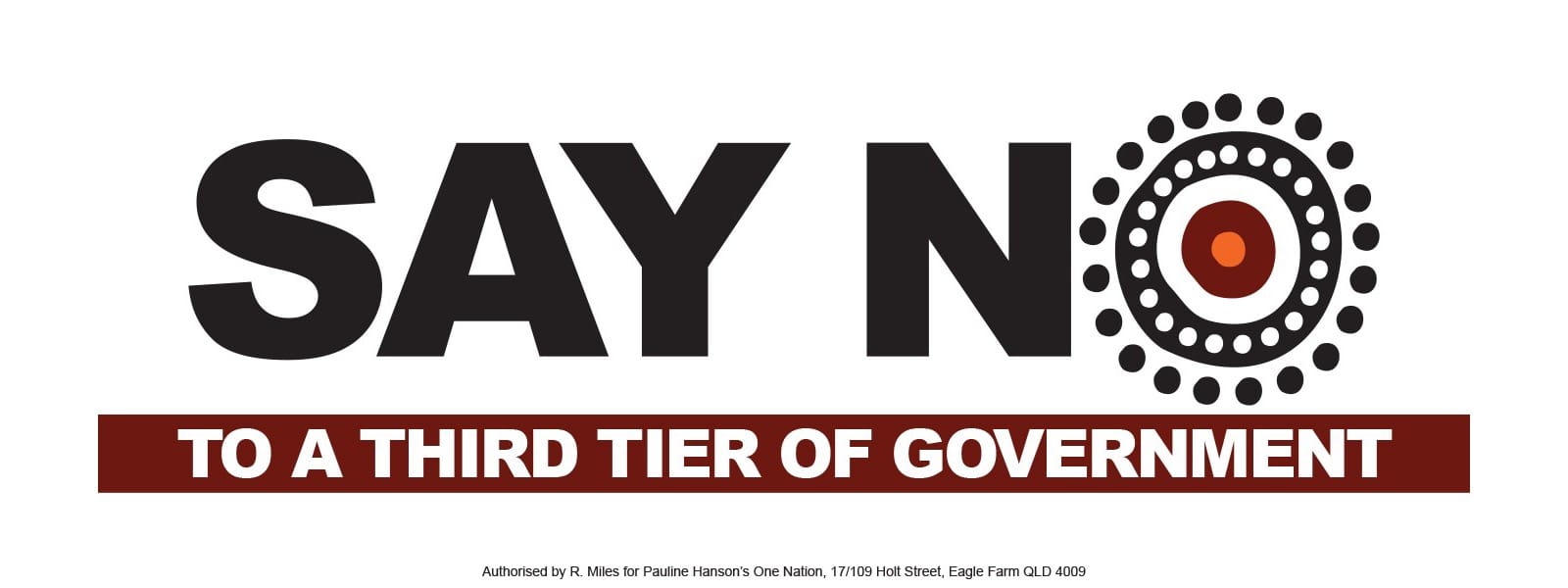
PM Anthony Albanese is an experienced politician. He knows exactly he’ll get massive headwinds from political opposition, other parties won’t support him as enthusiastically as needed. Some examples: David Littleproud from the Nationals lives up to his name and has already waved off. The Nationals don’t say YES but are running a NO campaign. The reason: Littleproud doesn’t believe a referendum would change Aboriginal and Torres Strait Islander situations. So: all nonsense, we continue as if nothing happened.
Peter Dutton, Liberal leader, has a mixed party bunch but is currently also slithering toward NO, because he must give the damaged Liberals a profile again (main target: the “forgotten Australians”) and can’t have ceasefire periods with political opponents. Dutton tries positioning himself as the voice of concern. Suits him. He says much must be clarified beforehand before he could agree. Everyone knows he’s saying NO anyway, because 15 years ago he was expressly clear against Rudd’s “Sorry”.
Albanese should really know nothing’s to be expected from Dutton. This puts Albanese on very thin ice, because even the Greens only offer a YES-NO - and a clear NO from Green Senator Lidia Thorpe, who as an Aboriginal person spoke very vocally against YES because it doesn’t go far enough for her and blocks the path to a “Treaty”. Treaty? That comes later.
“The Voice” - who says yes, who no?
If you’ve made it this far reading, it should be clear why Australians struggle with a simple “yes” or “no”: there’s lots of bad conscience, but also absolute will to keep suppressing (“Why now?”), party-political power struggles, no visible red thread runs through society.
As a neutral observer, one might believe Aboriginal and Torres Strait Islander people would answer the referendum with a clear “yes”. But even here there are tendencies toward “no” because the “Voice” is being pushed by a “white” person. This seems to evoke old fears that colonists still want to pursue their own agenda. Others feel it doesn’t go far enough. They want more. A claim, a treaty, something legally binding.
Almost cynical are David Littleproud’s arguments: He’s against the “Voice” because it won’t change anything for Aboriginal people. One should rather attend to Aboriginal needs by other means. Put differently, I read: Forget it, you’re getting nothing. And even if you get something, it won’t be enough to have influence.
Where’s this heading?
Nobody knows exactly what a successful “yes” would mean. That was deliberately planned by Albanese, now it’s backfiring. He wanted all Australians to set the direction, not argue over details already. That’s exactly what’s happening now. Especially Peter Dutton wants “more details”. Yet “The Voice” only goes to parliament after successful voting, where it gets kneaded in long, detailed political discourse and formulated as a bill.
That alone won’t be simple and will be energy-sapping for everyone involved. Because I experience the political culture as unconstructive, rather polemically dismissive. Anyone who dares gets cut down - the unbalanced media culture ensures that, where Rupert Murdoch holds a quasi-monopoly.
The more details demanded - and that’s understandable, because Australians want to know what they’re voting for - the lower the chances will be that “The Voice” and Anthony Albanese will succeed.
We’ll see if John Farnham was right back then:
This time, we know we all can stand together With the power to be powerful Believing, we can make it better
I’ll keep updating and expanding this note until the referendum (if there even is one).
First published in German at reinergaertner.de, where I’ve been at it since 1997. AI did the heavy lifting on the translation. I did the heavy squinting at the result.