
I’ve already tried explaining how AI tools could reshape writing work. This note - which wasn’t written by an AI tool, hopefully you can tell - explores what this means specifically for whitepaper creation.
The fascinating thing about whitepapers is they should contain insights you can’t find elsewhere on the web. Or get as polished output from ChatGPT. But writing a whitepaper isn’t exactly “sexy” work right now. Often it’s tedious and goes like this: someone has an idea, pushes it forward.
The idea might come from the technical team because they feel their technology or expertise isn’t recognised - not even in-house, let alone by customers. They want the whitepaper to explain their solution better. Classic engineer thinking.
Or it comes from sales. Not every salesperson has the technical depth to discuss with client-side experts. That’s not their job, but a whitepaper would help. Sometimes marketing wants to own a topic more deeply. Again, whitepapers fit.
Different audiences need modular thinking from day one
You can already see the audiences differ wildly. Technical experts want deep technical description. Salespeople need to show they understand the tech whilst reaching high-level decision-makers who aren’t technically savvy. They need enough ammunition for competent decisions. Marketing tries connecting various audiences while appealing to markets and maybe investors.
One whitepaper can barely handle all that. Worth thinking modularly - do you design a base whitepaper and customise for each audience? Or prioritise and target one specific group? The question: what gives most bang for buck?
Now what? First, discuss what the whitepaper should actually achieve. For whom, what’s already known versus new, what truly matters for the audience. This process gets rushed far too often. Usually someone creates an initial structure following the old problem-and-solution pattern, then digs deeper. These become the whitepapers that take months of work but end up written for the company gallery, not customers.
More thinking, less writing
Anyone wanting better results spends much more time on conception. This means detailed discussions with all stakeholders about what the whitepaper should deliver. Includes thinking about reuse and repurposing of content. Whitepapers don’t just create content - the process itself is fascinating and revealing.
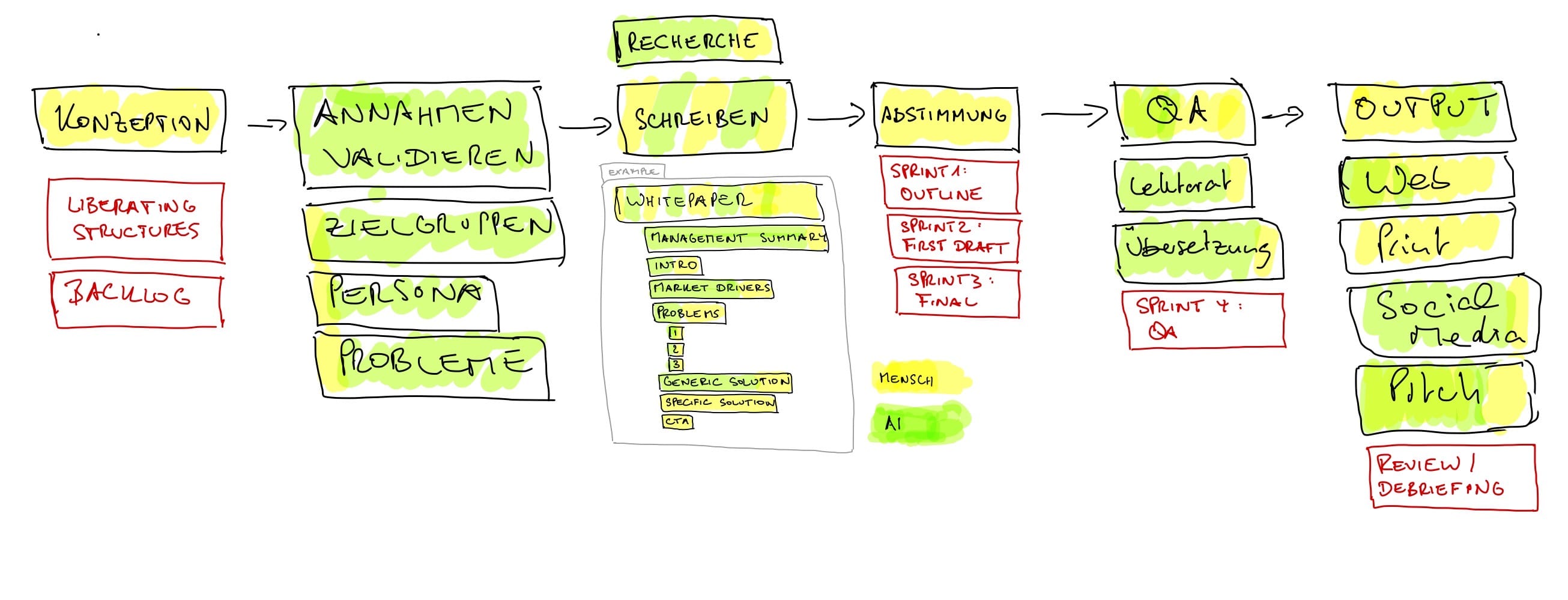
I want to emphasise the audience, their problems, and what value a whitepaper should provide. Whitepaper commissioners usually have rough ideas. They want to reach people in certain positions with specific decision-making power and budgets. Ask more precisely who decides what and why, who else needs internal convincing - often you get blank stares.
Important to consider exactly who you’re addressing with what, what’s genuinely needed to create real “wow factor”. This is highly strategic work deserving much more time.
How AI can accelerate the process and improve results
Here’s where artificial intelligence enters. Previously we took business or technical requirements as given, then worked on outlines and content creation. We assumed our customer experience told us exactly what they needed. Doesn’t always work.
Sometimes customer knowledge gets overestimated, sometimes underestimated. Other times you have completely different customer groups in mind and only realise at the end you’ve written past your actual relevant audience. Massive time and cost waste. Time for homework. Worth it.
In an agile environment you’d involve stakeholders - those actually benefiting from the whitepaper (internal people and customers) - to roughly determine content. Ideal. I find co-creating whitepapers with customers interesting long-term, though not today’s topic. Don’t know if this exists or might be a new writing approach.
Why we should validate assumptions via AI before starting
We can use new AI tools like ChatGPT to better validate assumptions. We can define and develop a persona via ChatGPT, then ask what problems or challenges someone in that position might face. The responses are fascinating.
We can go further and test our original assumption, telling the system: “Write a whitepaper or provide an outline fitting this persona with these topics and directions.”
The result is fascinating - not necessarily because it’s factually accurate, but because we can feed this back to commissioners, especially technical experts and salespeople. Then we have solid discussion foundation about whether our assumptions are correct and how our knowledge and experience can provide exclusive, valuable benefit.
Once we’ve worked this out, we can build an outline. AI can also refine this.
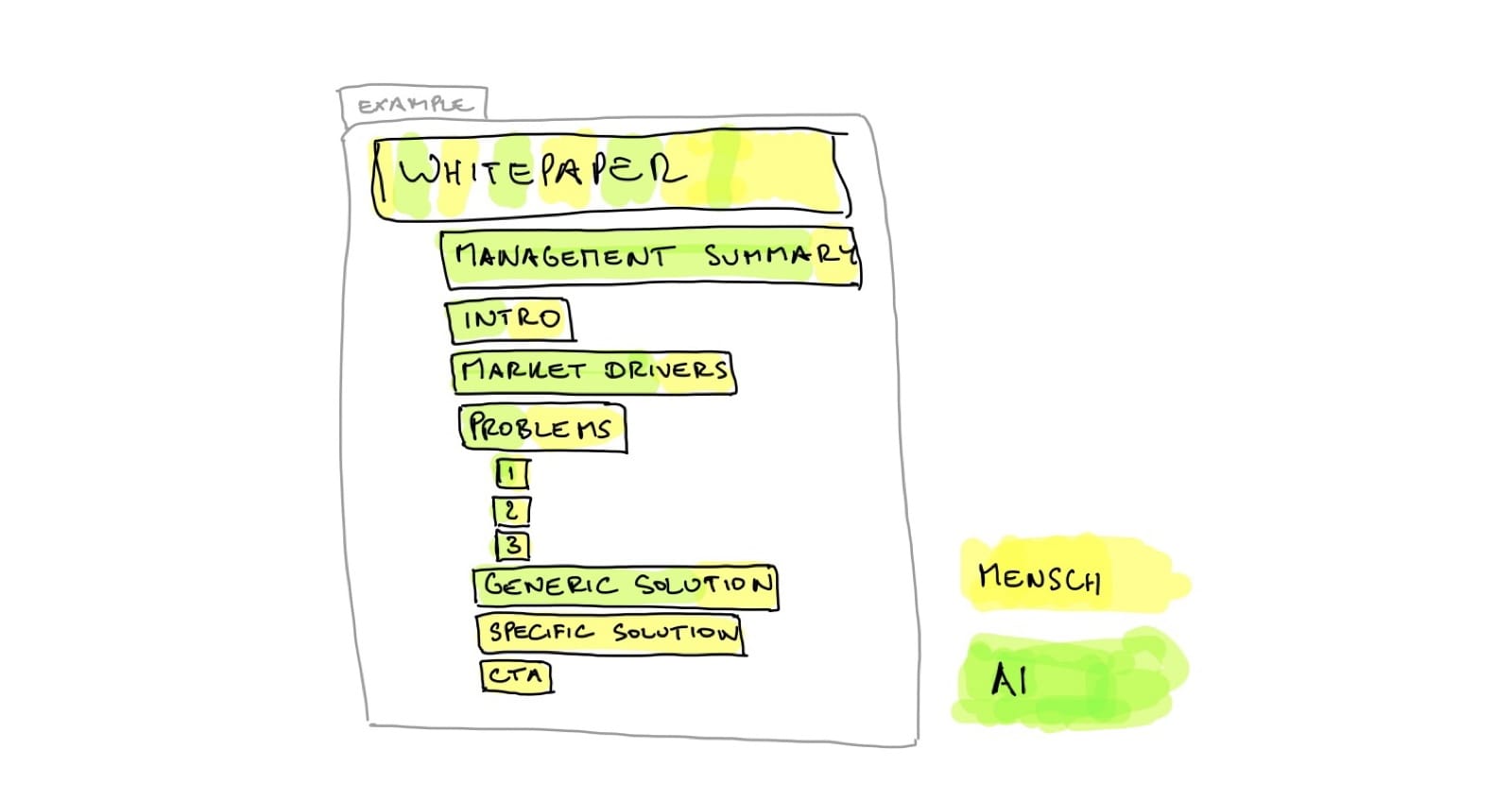
From experience, it’s crucial that all contributors know the outline, including the top people who’ll approve the final whitepaper. Nothing worse than a finished product where the big boss says they want it completely different. Through early validation we have excellent arguments against these arbitrary power decisions from above, if they happen.
Researching and writing with AI as smart co-pilot
With a good outline, we can agilely decide which parts to tackle first. Depending on goals and whitepaper format, there are various approaches. Most whitepapers include a management summary explaining everything in two solid paragraphs for the boss. Then there’s a section catching the audience by explaining market developments, drivers, problems and challenges.
Most readers already know this general stuff. I believe such sections can be researched and 80% written quite quickly with AI tools.
Looking at three specific problems to explain them precisely, we need knowledge and experience to identify these problems. We can probably generate over half through AI tools. Generic solutions might already exist in the market - AI helps here too.
Where human brainpower is still essential
Now we reach the most important and valuable point in the whitepaper. We need all our mental capacity to clearly explain our solution, approach, advantages and benefits for customers. AI tools help somewhat with consistent benefit and value formulation. It’s fascinating how well AI tools extract essences. AI becomes sparring partner for our work.
Once we’ve worked out what your solution can do and achieve, we need an individual call to action - we and you know best what goes here. When everything’s finished, we can use AI tools for cleanup - always combined with human eyes and genuine, lived experience.
Where AI is superior and should be deployed
We can try getting AI to output an alternative management summary from existing text. Fascinating to see what the machine produces. Sometimes it’s even better than our original thinking. But it ultimately validates our approach.
Very interesting are functions like auto-generating social media posts from the paper. I could ask the tool for four LinkedIn posts, one blog post, three Instagram posts, etc. Works with hashtags and everything. Good enough for quick attention. Whitepapers can also be automatically converted to pitches.
I’ll explore in another post what you can do with a finished format to prepare it for other formats. Humans can do this manually but it’s time-consuming and expensive. Tools can really help here.
Not faster, but better and more targeted whitepapers with AI support
Anyone thinking AI tools lead to faster content and fully written whitepapers is right. Isn’t that enough? Pages full of letters that either nobody reads or leave readers who successfully fought through them with nothing - no value.
I believe future whitepaper creation will take roughly the same time as conventional creation. But results will be significantly better because we have more time to think, need less writing time, and create texts that actually land. Not because the machine suggests it, but because we contributed decisively.
This shifts whitepaper writing from tedious obligation to inspiring mental challenge with potential for further initiatives. I’m in - are you?
First appeared in German on reinergaertner.de, my blog since 1997. AI-assisted translation — because life’s too short to translate 150 posts by hand, but too long to leave them in German.