Asian martial arts describe a fascinating path from novice to master. The concept is called “ShuHaRi”.
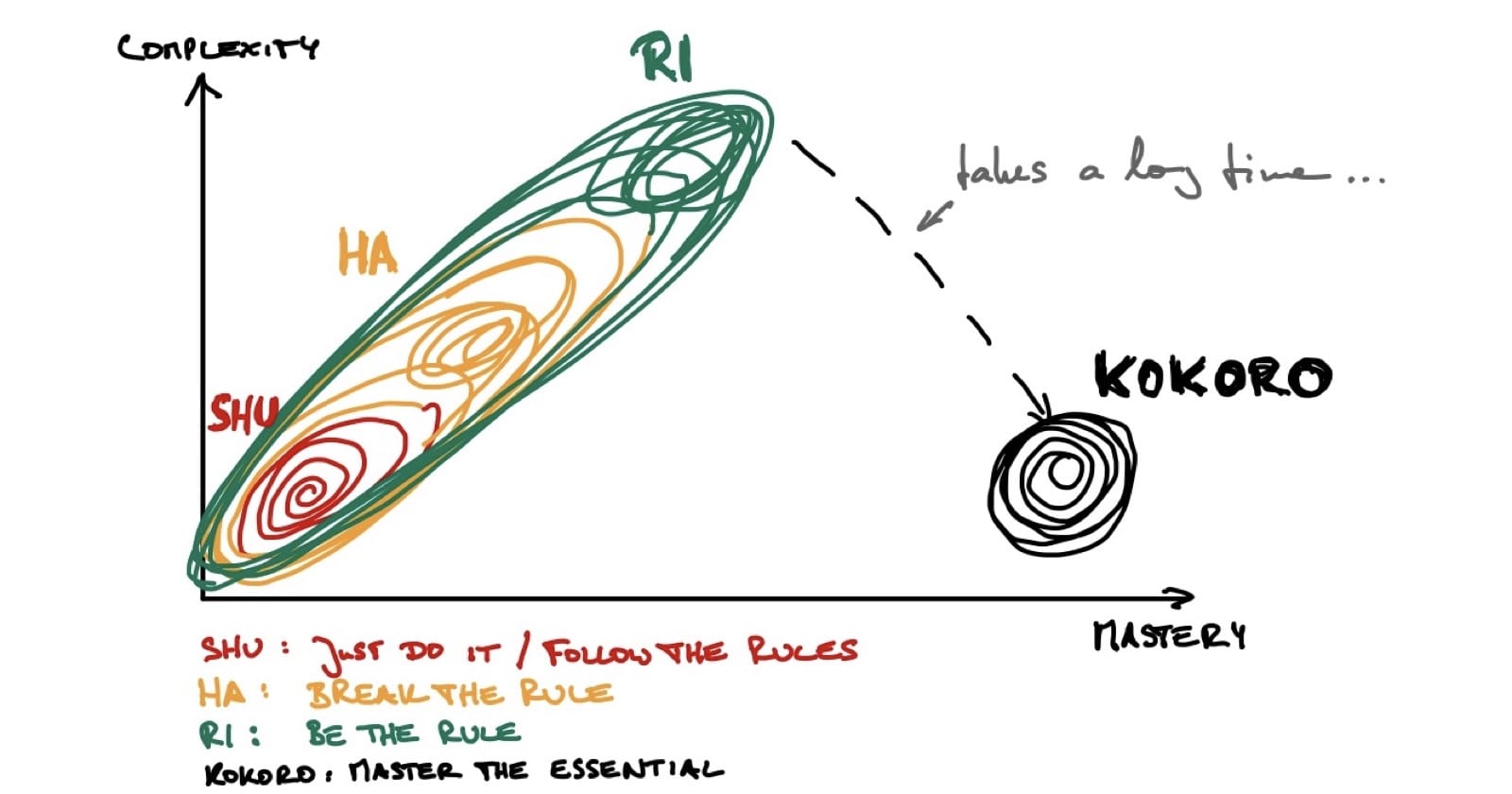
At the beginning, the newcomer exists in Shu: We don’t yet understand the background, try to get our bearings, and watch our initial motivation melt away when first successes don’t materialise. Shu means: understand the rules and follow them. Practice them.
If you persist long enough, you reach a point where you’ve internalised the rules so deeply that you can consciously break them in certain situations. Because you’ve grasped how they work and why they exist. You’ve arrived at “Ha”. Many stop here. The next level, “Ri”, initially creates only confusion. In Ri, you “are” the rule. You live the rule, it’s become flesh and blood, you no longer need to think about it. You can’t really explain why or how it works anymore. But that’s no longer important — you deploy your abilities unconsciously, automatically, because you’ve mastered them.
For many people, this long journey ends here. They consider themselves masters. In Ri, both complexity and ability are high. But it continues. What follows is about essence, reducing complexity, sharpening tools. Not all tools, though — just an exquisite selection. The essence. The end state of this reduction to the absolutely essential and absolute mastery is called “Kokoro” in Asian martial arts.
We find ourselves in different life situations at Shu, Ha, Ri, perhaps even approaching Kokoro. In my previous career path, I was somewhere between Ha and Ri, I’d say. My recent decision to move into “Agile” and become a Scrum Master catapulted me back to Shu. But I feel I’ll reach Ri quickly and then be ready for the long path to Kokoro.
From one ladder to the next: Flying doesn’t work
I compare this to a ladder we climb ever higher professionally. Doesn’t have to be a career ladder — it could simply be professional (and personal) development. We climb higher and eventually notice the ladder will soon end. What then? Simply remain at the top? Or climb down, find another, potentially longer ladder and climb up to Kokoro? I chose the second path.
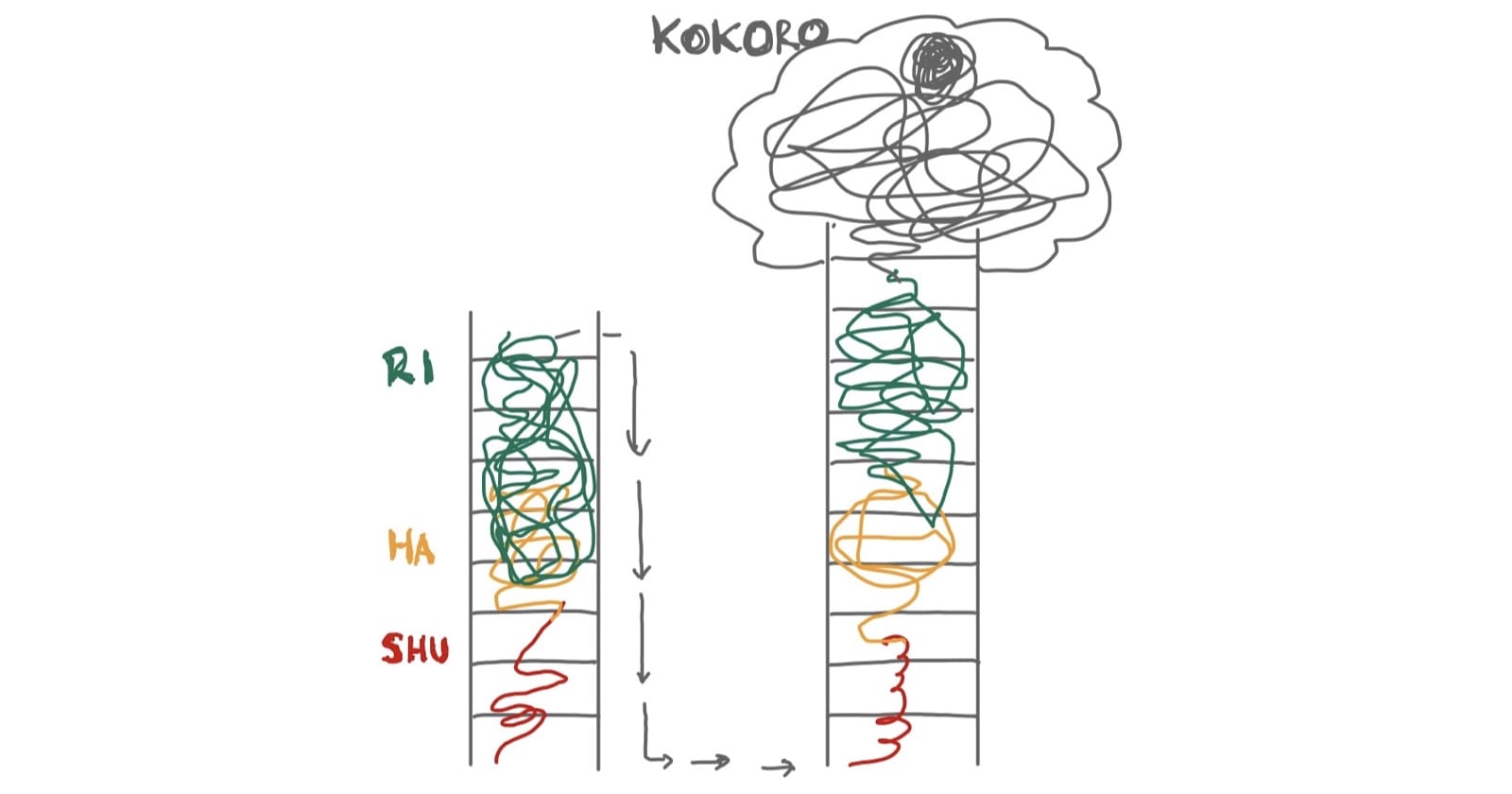
The descent isn’t easy, but it’s quick. Feels like a crash. Painful and challenges the ego to its limits. But you learn from it. I think I’ve finally reached the bottom, because I’m already climbing the rungs of my new ladder. I’m confident I’ll be on this ladder for a long time. From Shu, through Ha, Ri, up to Kokoro. The journey is worth it — onward to new heights.
From reinergaertner.de, est. 1997. Translated with the help of an AI that speaks better English than I do. Which isn’t saying much, after 25 years of Denglish.