I’m a big fan of timeboxing. Which is why I’ve been sprinting with tomatoes for over 13 years — Pomodori, actually.
The idea behind the Pomodoro technique is simple: you can only maintain deep focus for so long. After a short break, you can go again. Pomodoro breaks it down to 25 minutes of work, 5 minutes of rest — ideally with movement. During those 30 minutes, you collect one “pomodoro”. One tomato.
I like working through tasks in Pomodoro series. Four pomodori equal about two hours. For me, that’s a “sprint”. If I manage two sprints per day with deep concentration, I’m already very satisfied. Anything beyond that is even better.
The first sprint gets the tasks that need special focus. My motivation is high, my eyes are fresh. Sprint 3 starts in the afternoon. That gets the tasks I can handle more easily. Then it’s game on.
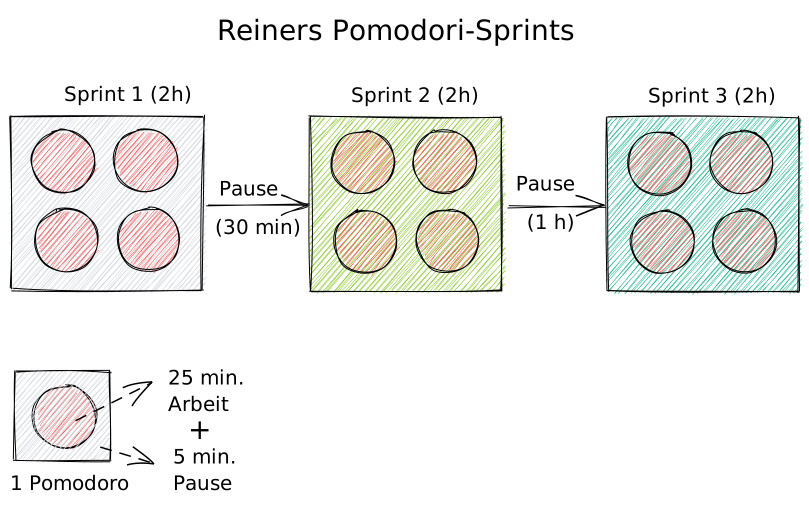
I currently use the app “Focuskeeper”, which rings after 25 minutes. I drop everything, drink a glass of water, go to the loo or move around. Five minutes later I’m refreshed and ready. When I work this way, I’m much more relaxed than in “zombie mode” — which I still fall back into occasionally.
Sprint or middle distance?
The “sprint” idea comes from Scrum. Though I’ve adapted the concept to my needs. Officially, a Scrum sprint is a small project that runs anywhere from a week to a month, according to the official Scrum Guide.
Like in Scrum, I have a “backlog”, but I don’t plan my sprints Scrum-style. Mornings I do a quick daily standup with myself and push the tasks I want to accomplish that day into the “Doing” column. I sort them by priority and start with the most important task in the first sprint and the first tomato. The official Scrum sprint is more like a middle-distance run for me. This only works because my tasks are usually less complex and I can handle them pretty fluidly.
First published in German at reinergaertner.de, where I’ve been at it since 1997. AI did the heavy lifting on the translation. I did the heavy squinting at the result.